
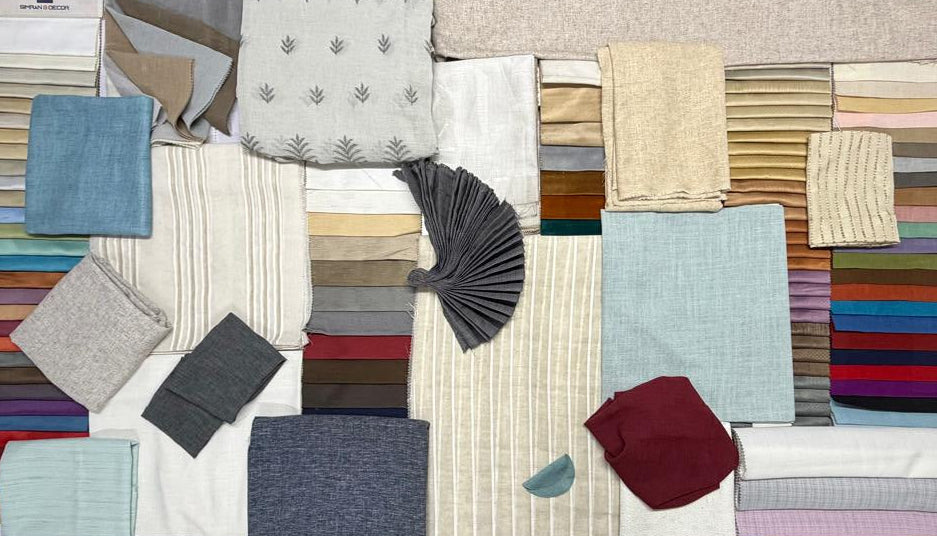
Understanding curtain and fabric terminology can transform how you shop for window treatments. Whether you're a design enthusiast or simply looking to refresh your home, knowing the language of curtains helps you make informed choices that match your aesthetic and functional needs.
Fabric Weaves and Textures
Damask is a jacquard-woven fabric featuring intricate patterns with a subtle sheen. Often used in formal settings, damask curtains add elegance and depth through their reversible design, where the pattern appears on both sides.
Velvet is a plush, soft fabric with a dense pile that creates a luxurious feel and rich color saturation. Velvet curtains provide excellent light-blocking properties and are ideal for creating a sophisticated, dramatic look in any room.
Linen is a natural fiber fabric known for its breathability and relaxed texture. Linen curtains offer a casual, organic aesthetic and work well in contemporary or farmhouse-style interiors, though they may wrinkle naturally over time.
Cotton is a versatile, breathable natural fiber that's easy to care for and dye. Cotton curtains are available in countless patterns and colors, making them suitable for virtually any décor style.
Silk is a luxurious natural fiber with a smooth, lustrous finish. Silk curtains drape beautifully and create an elegant ambiance, though they require careful handling and may fade with prolonged sun exposure.
Jacquard refers to a weaving technique that creates intricate, detailed patterns directly into the fabric. Jacquard curtains showcase complex designs without requiring printing, resulting in durable, long-lasting patterns.
Curtain Styles and Constructions
Sheer curtains are lightweight, translucent fabrics that filter light while maintaining privacy and allowing visibility from inside. Sheers are often layered with heavier curtains for both function and aesthetic appeal.
Blackout curtains are densely woven or coated fabrics designed to block out light almost completely. These are ideal for bedrooms, home theaters, or any space where light control is essential.
Thermal curtains have insulating properties that help regulate room temperature by reducing heat loss in winter and blocking heat in summer. They're both energy-efficient and functional for temperature-sensitive spaces.
Grommet curtains feature large metal or plastic rings sewn into the top, allowing them to slide easily onto a curtain rod. This modern style offers a clean, contemporary look and simple operation.
Pinch pleat curtains have evenly spaced, tailored folds sewn into the heading, creating a formal, structured appearance. This classic style works beautifully in traditional and transitional interiors.
Rod pocket curtains have a sewn channel at the top through which the curtain rod passes. This traditional style creates soft, gathered folds and works well with decorative rods.
Tab top curtains feature fabric loops sewn to the top that slip over the curtain rod. This casual style is popular in contemporary and relaxed home settings.
Fabric Characteristics
Drape refers to how fabric falls and folds when hung. Fabrics with good drape flow smoothly and create elegant, flowing lines, while stiffer fabrics hold their shape more rigidly.
Weight describes the density and thickness of fabric. Lightweight fabrics are sheer and airy, while heavyweight fabrics provide better light blocking and insulation.
Opacity indicates how much light passes through the fabric. Opaque fabrics block light almost entirely, while semi-opaque fabrics allow some light diffusion.
Pile refers to the raised fibers on fabric surfaces, as seen in velvet or chenille. Pile fabrics feel soft and luxurious but may require special care during cleaning.
Nap is the directional texture on certain fabrics where fibers lay in one direction. Fabrics with nap must be cut and sewn carefully to ensure consistent color and appearance throughout the curtain.
Color and Pattern Terms
Colorfast describes fabric that resists fading when exposed to sunlight or washing. Colorfast fabrics maintain their vibrancy over time, making them ideal for high-light areas.
Ombre is a gradual color transition from one shade to another, creating a subtle, sophisticated effect. Ombre curtains add visual interest and depth to a room.
Geometric patterns feature shapes like stripes, checks, or abstract designs. These patterns work well in modern and eclectic interiors and can visually alter room proportions.
Floral patterns showcase flowers and botanical elements. Floral curtains bring nature-inspired beauty and can range from delicate and romantic to bold and contemporary.
Functional Features
Flame retardant refers to fabric treated to resist ignition and slow the spread of fire. Many commercial and residential curtains are treated with flame-retardant finishes for safety compliance.
Moisture resistant fabrics repel water and humidity, making them suitable for bathrooms, kitchens, or damp climates. These fabrics resist mildew and maintain their integrity in humid environments.
Stain resistant fabrics have protective coatings that help repel spills and prevent staining. This feature is particularly valuable in high-traffic areas or homes with children and pets.
Mastering these terms empowers you to communicate clearly with designers, shop with confidence, and select curtains that perfectly balance beauty with functionality for your home.
Share:
Fire Retardant Fabrics
Shower Curtain Fabrics